
By Julie Anne Barnes Ibarra of The Misty Mushroom
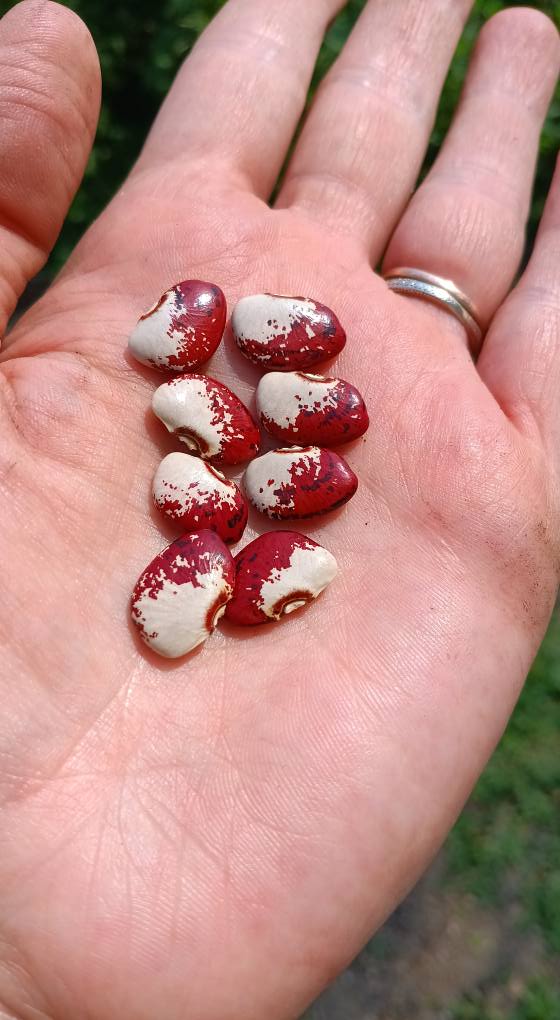
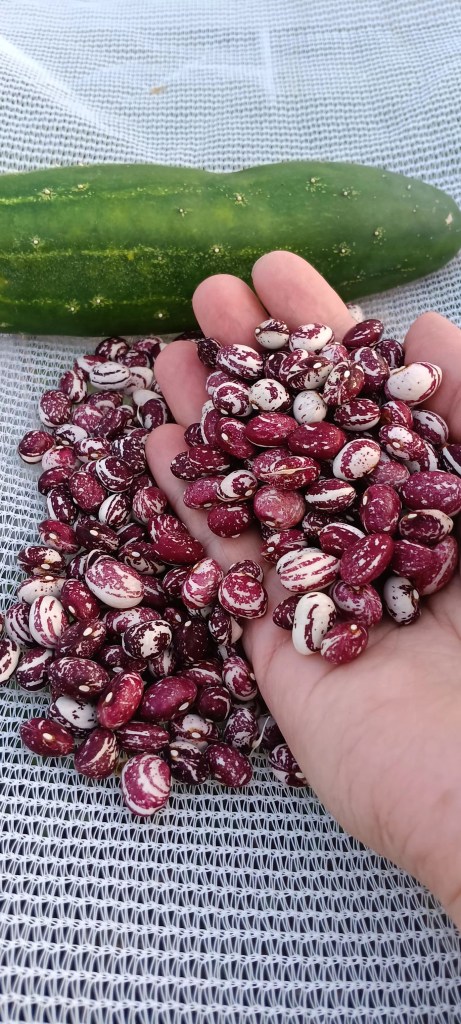
I’ve always had a fascination with seeds; their shape, size, color, texture, manner of dispersal, and method of germination. It all traces back to my six-year-old self swiping seeds from my mom’s birdfeeder and guerilla gardening them successfully in a mud pit to produce gigantic sunflowers (much to her surprise!). As a vegetable gardener, I love pole beans and their multitude of patterns and colors. It is a delight shelling them from their pods and running my fingers through a bowl of the smooth beans.

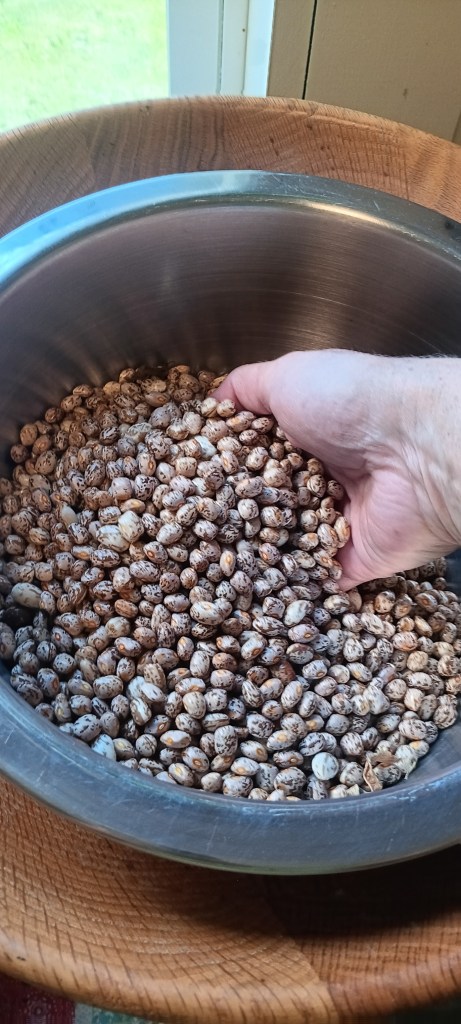
As a “walkabout professional” (aka meandering hiker), I really enjoy plant identification using seeds. It is exceptionally useful for sedge and grass species and can liven up a winter hike when you see familiar faces hiding amongst the dried-out scrub, while also seeking to identify new ones. I was fortunate to rescue a copy of “Weeds in Winter” by Lauren Brown from a library sale, a fantastic guide with exceptional illustrations on seed heads. As helpful and user friendly as this guide is, it did not provide any illumination on a very weird fuzzy-coated bean I discovered growing on a vining plant alongside Yellow Jewelweed (Impatiens pallida) and Phragmites grasses while exploring a small shoreline.
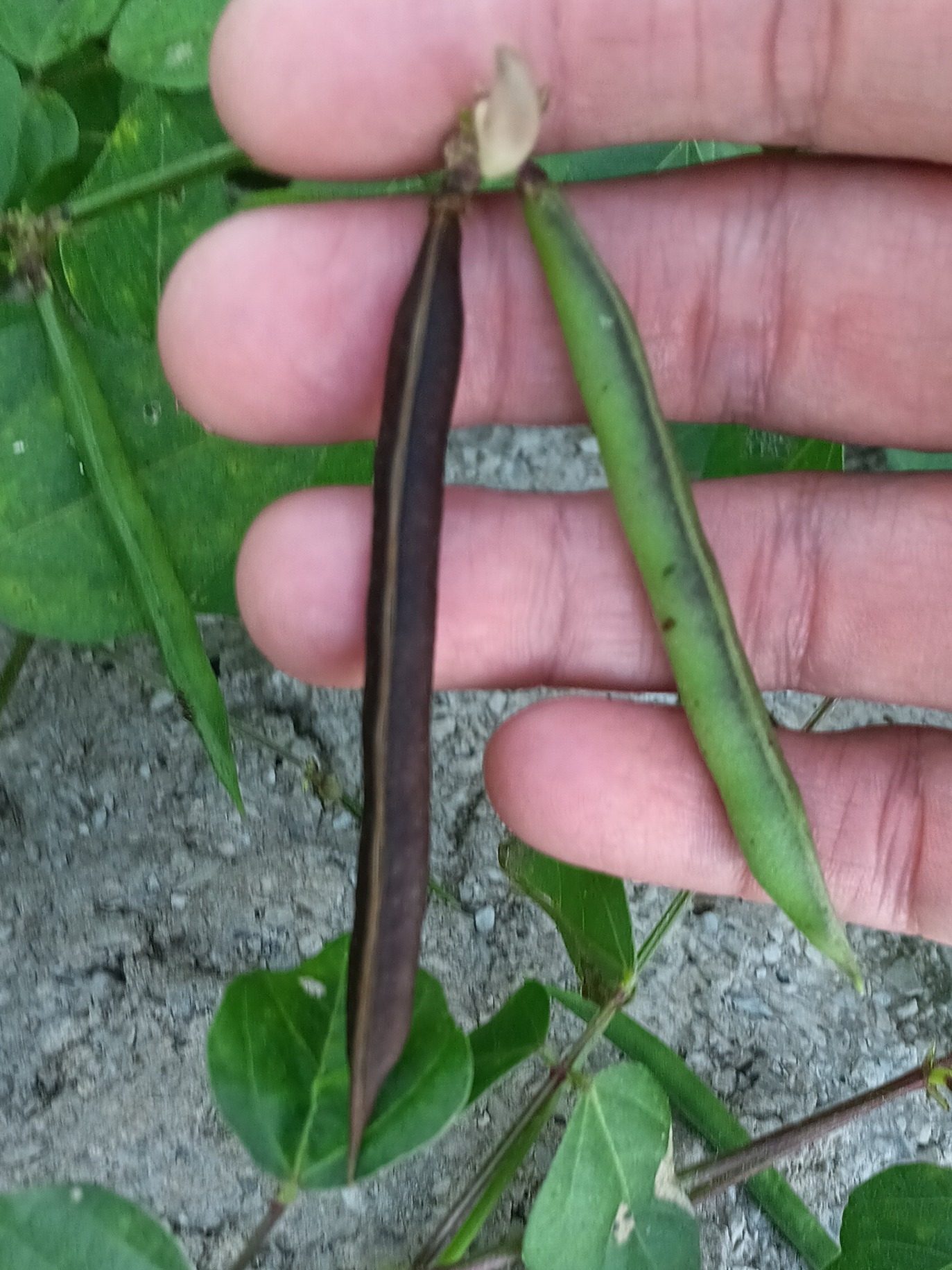
I often poke around dunes and shorelines here in Ottawa County because the ecosystem is so different from where I grew up in Southwest Ohio (Preble County), and admittedly I am always drawn to water. On one such venture I scuttled down a steep sandbank and found a dense population of a wild bean growing around driftwood and old concrete slabs by the waterside. Along the vines were pairs of pinkie finger long bean pods in greens and dark browns. Of course I couldn’t resist trying to pick some of the mature pods, and as I squeezed one, I almost fell into the water as the seed pod unfurled and erupted the contents at me like a tiny confetti cannon. I should have considered this an option, as the more explosive artillery of Jewelweed was closeby.
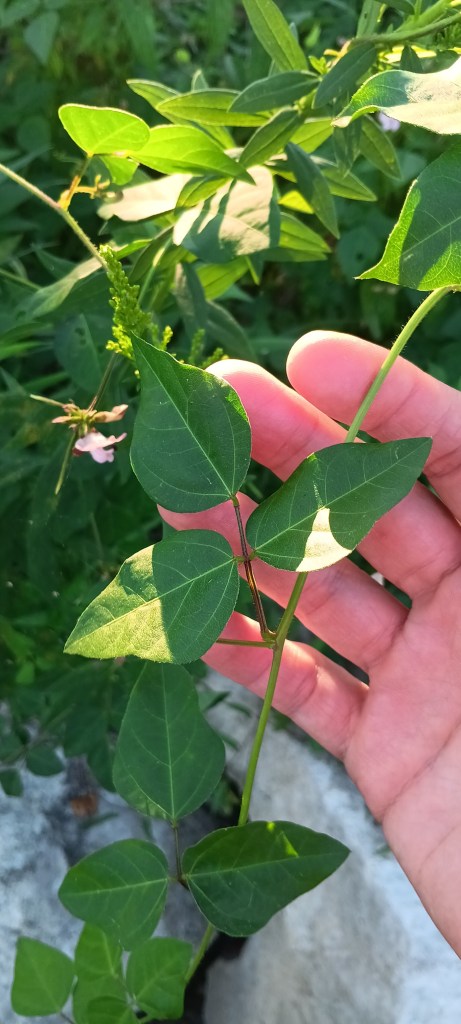
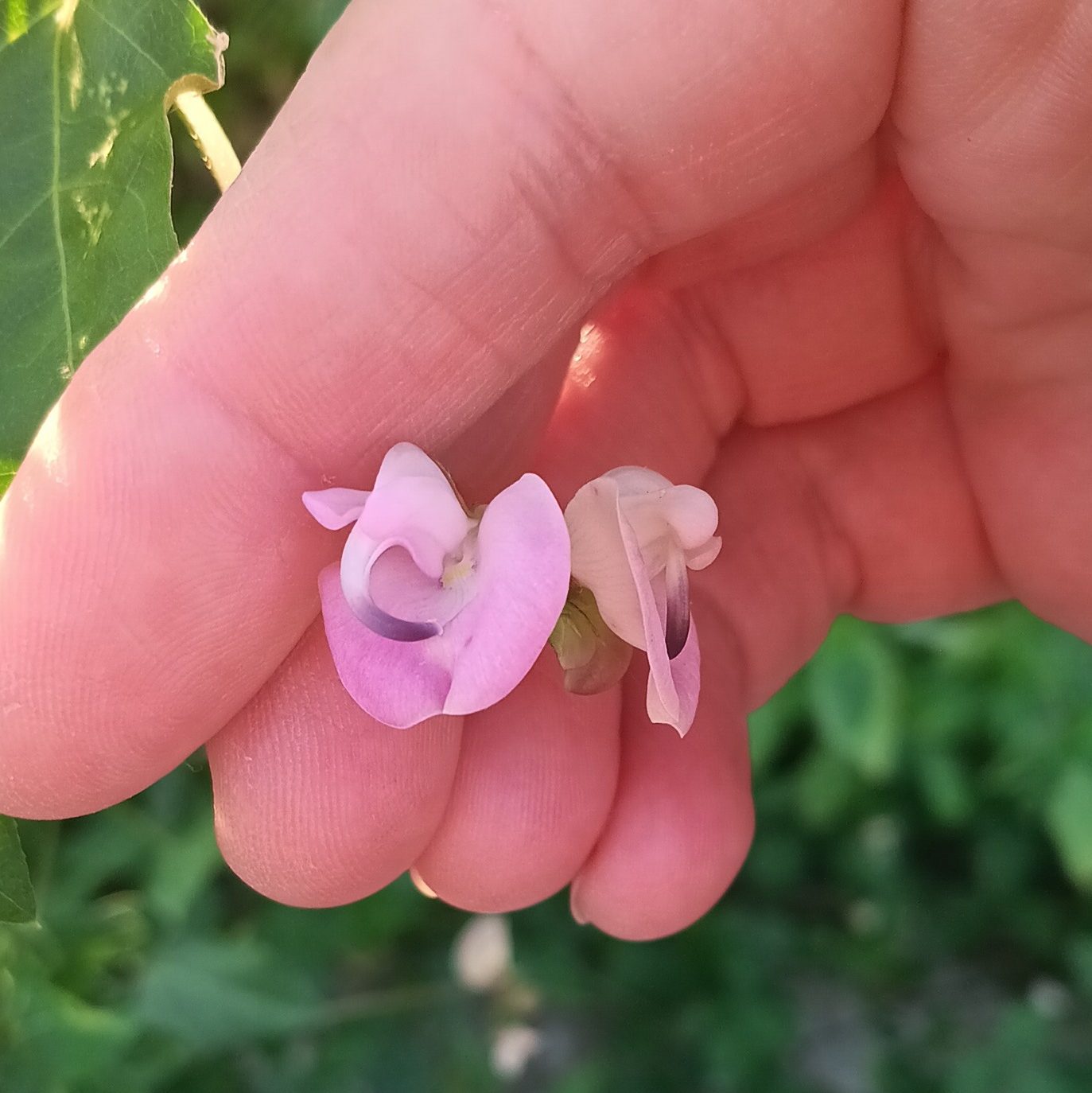
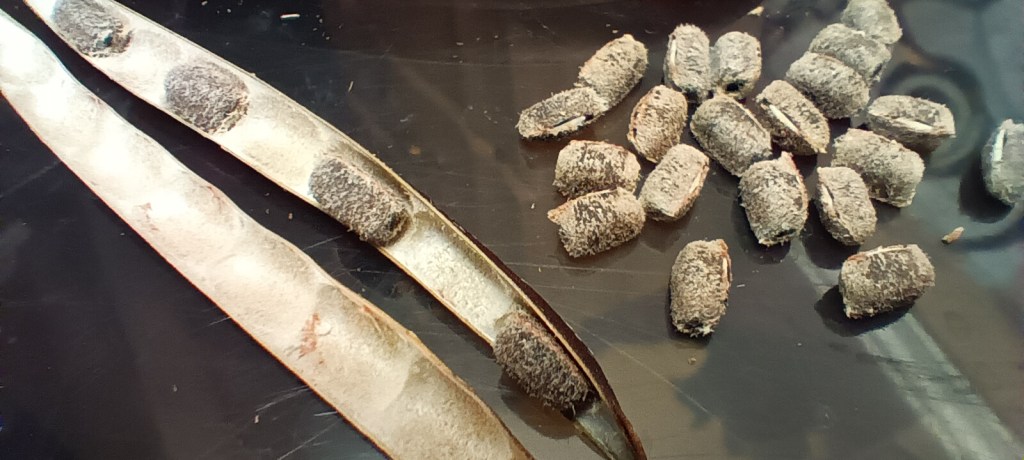
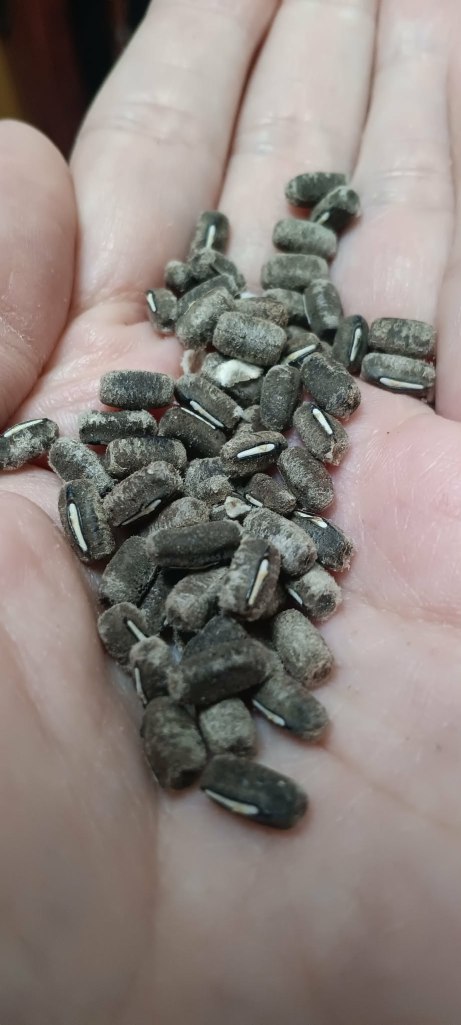
As I took another more careful approach and gathered some of the bean seeds from their pods, I examined them and found their coats to be fuzzy. This was quite strange and I had thought that maybe it was just a fungus. I had never witnessed a seed that had hairs like this, especially something from the bean family. The stem, leaves, pods, and unopened flowers had tiny hairs all over, but on first glance they were not very noticeable to me. The odd hook shaped pea flowers were also curious and a main identification factor. When putting all the pieces together, I had found Strophostyles helvula, aka Trailing Fuzzybean or Amberique-Bean.
Trailing Fuzzybean is a trailblazer, known as a pioneer species that colonizes disturbed and often inhospitable environments for other plants and forms an important role in ecological succession; as a legume assisting on nitrogen in the soil. It is often found in sandy and wet areas, being common along coastal ecosystems and river banks, but also in damp thickets, open woodlands, and disturbed sites. Those fuzzy hairs on the seeds serve a greater purpose, allowing for them to easily float in water and relocate.
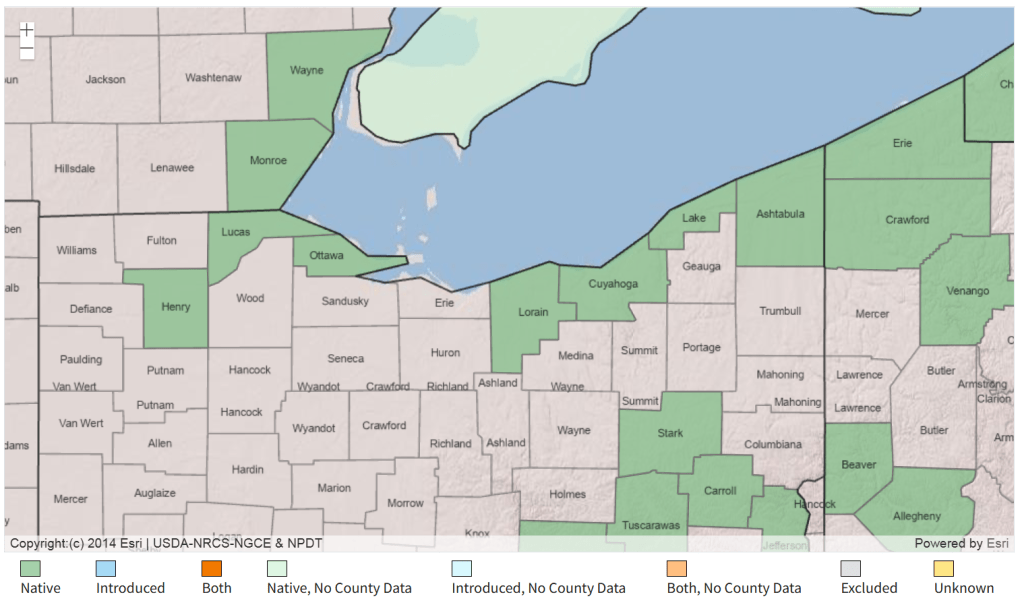
Strophostyles helvola native range in Northern Ohio (USDA)
Preferring full sun, the vines can stretch out several feet and produce flowers by late summer that are frequented by a variety of species including Megachile integra a specialist pollinating bee of Fuzzybeans, Bumblebees, Large Leaf-Cutting Bees, wasps, ants, flies, and small Halictid bees. If not flowering, the species is easily misidentified as poison ivy, which is amusing considering that it has documented usage by the Haudenosaunee Confederacy (Iroquois) as a topical treatment for poison ivy rash.
For our area it is a host for the Southern Cloudywing (Thorybes bathyllus) and Silver Spotted Skipper (Epargyreus clarus). The Bean Leaf Beetle (Cerotoma trifurcata) which is spreading outside of its native range with soybean production has been noted to feed on the leaves of Strophostyles helvola and might be useful to research if it can be a successful trap plant alongside smaller crop plantings of snap beans. Those fuzzy beans are eaten by birds like Turkeys, Bobwhites, and Mourning Doves.
Trailing Fuzzybean is a wild relative of the cultivated common bean (Phaseolus vulgaris) and is edible for us too! The green pods can be eaten raw or cooked like green beans and are quite tasty. The mature dry beans can be prepared like black beans and cooked; having thicker skins than cultivated varieties. Ethnobotanical history notes usage by the Choctaw people for food by mashing and boiling the roots. Popular forager Sam Thayer notes in his Field Guide to Edible Wild Plants that “it makes me happy when I find a helvula of them.”
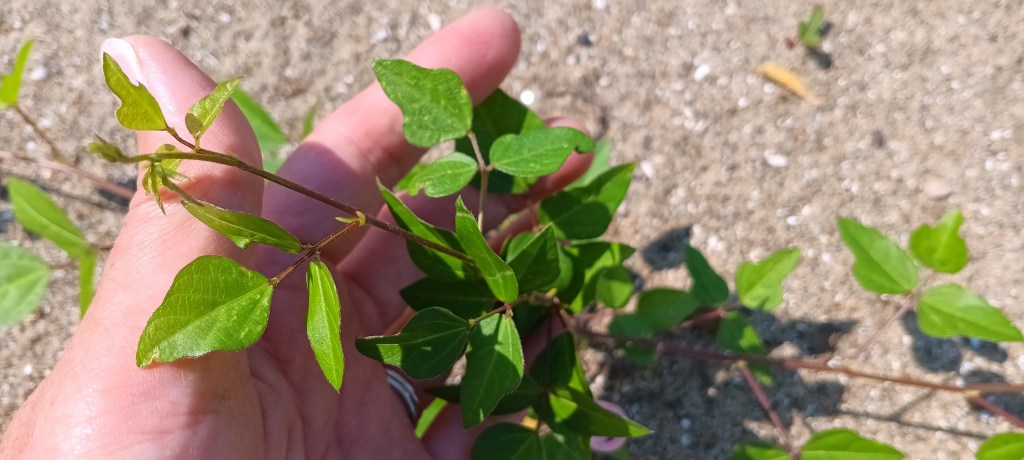
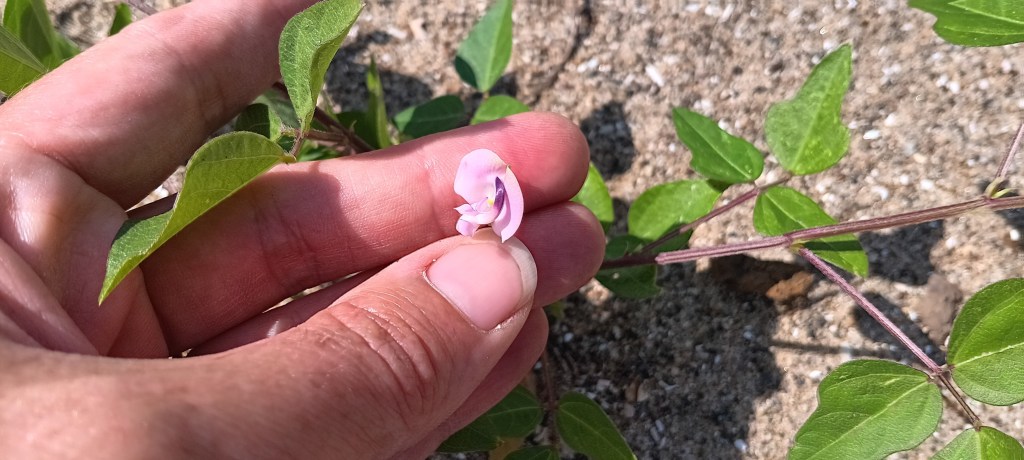
Strophostyles helvula from the dunes around Camp Perry
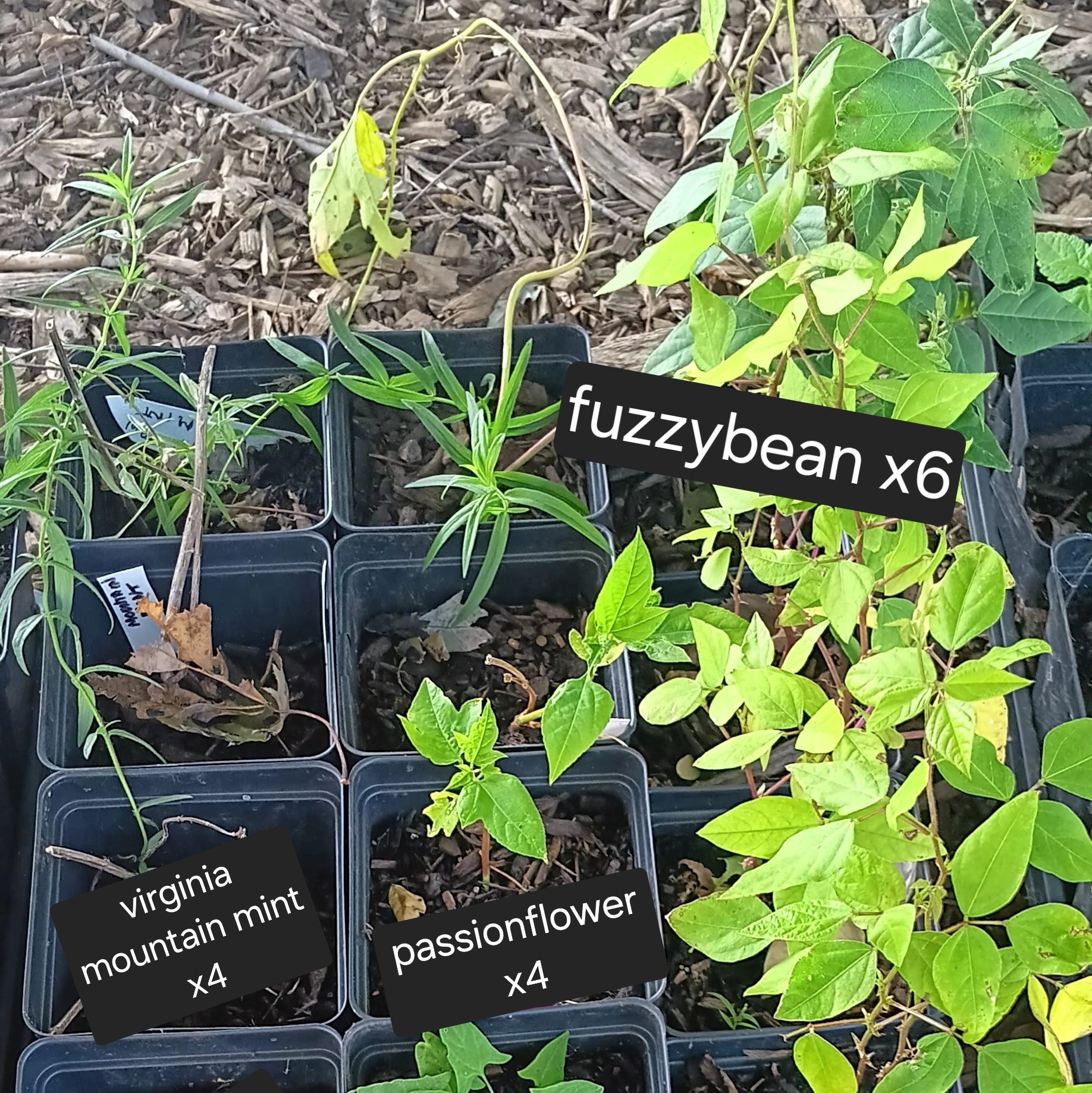
I’ve had great luck cultivating this species by seed as it is planted like any cultivated bean, but needs thirty days of cold stratification; making it ideal to start in a milkjug greenhouse during the cold months. In the first year the plant retains the size of most perennial species but begins to stretch out in the second and third. I’ve added this to spots in the garden where other plants find difficulty getting established, and I have seen it included in prairie plantings including the plot outside the visitor’s center at Ottawa National Wildlife Refuge.
Consider Trailing Fuzzybean in your garden, regardless of your intentions. The beauty of the plant from bloom to vine, the resiliency in a variety of soils, the contributions it has for soil health, the support it provides for of our insect species and wildlife, the medicinal and food value, and it is fun to say the name…as my spouse has been bombarded with hilarious native plant common names already such as Beardtongue, Dogbane, Snakeroot, Showy Tick, and now Fuzzybean. Keep your eyes peeled while walking the dunes next time you visit the shoreline in late summer and hopefully you can delight in this wild vine as much as I do.

LINKS
USDA Plant Database: Strophostyles helvula
USDA Plant Guide: Trailing Fuzzybean
Native American Ethnobotany: Strophostyles helvula
Haudenosaunee Confederacy (Iroquois Confederacy)
Onöndowa’ga: Seneca Nation
Sunistano Seed Co.: Indigenous crop seeds
Alliance of Native Seedkeepers: Haudenosaunee Bear Paw Pole Bean
 The Misty Mushroom
Leave a comment