

By Julie Anne Barnes Ibarra of The Misty Mushroom
Bumblebees bring me a joy that can be defined as a “glimmer”; a sight while I am out in the garden that provides me a boost of serotonin wrapped up with sublime happiness. Their big fuzzy bumbling provides so many smiles, especially when I discover them asleep in flowers on a cool summer’s morning. I wanted to support bumblebees in my landscape because they are pollinating powerhouses, visiting a multitude of flowers and benefiting many vegetable and fruit bearing plants with their buzz pollination.
There are gardeners out there that will take electronic toothbrushes to their tomato plant flowers in order to ensure that they are properly pollinated…and frankly, I refuse to be that person because I already put on a silly show for the neighbors hand pollinating a small plot of maize, and bumblebees are just better at it.
But how would I go about encouraging bumblebees to visit my vegetable garden?
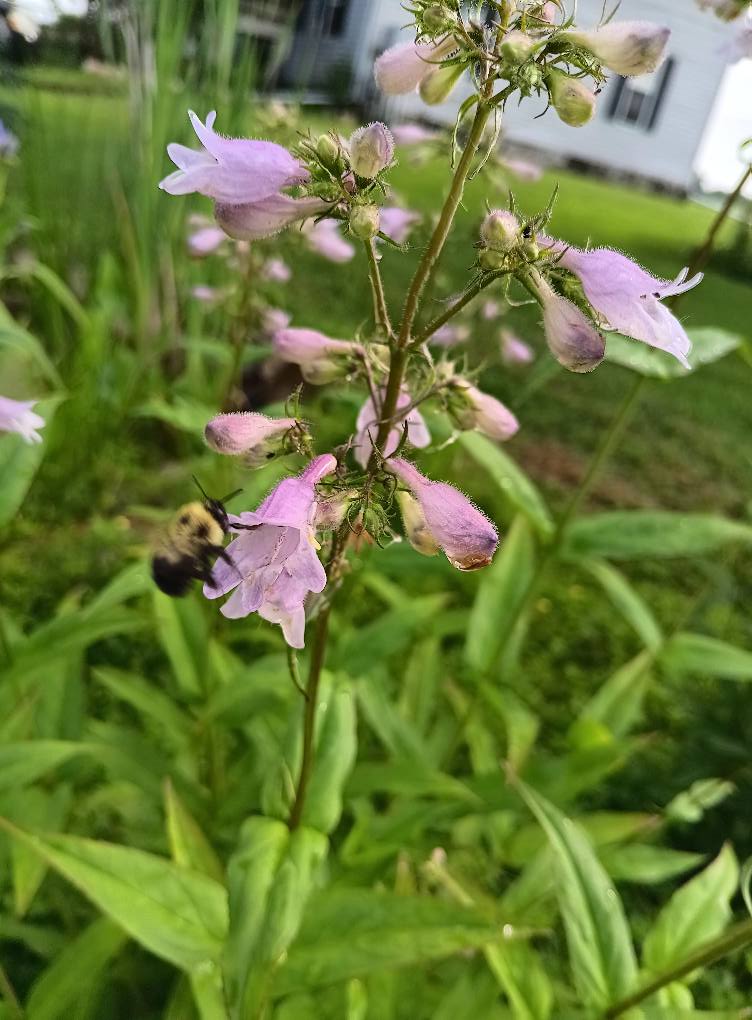
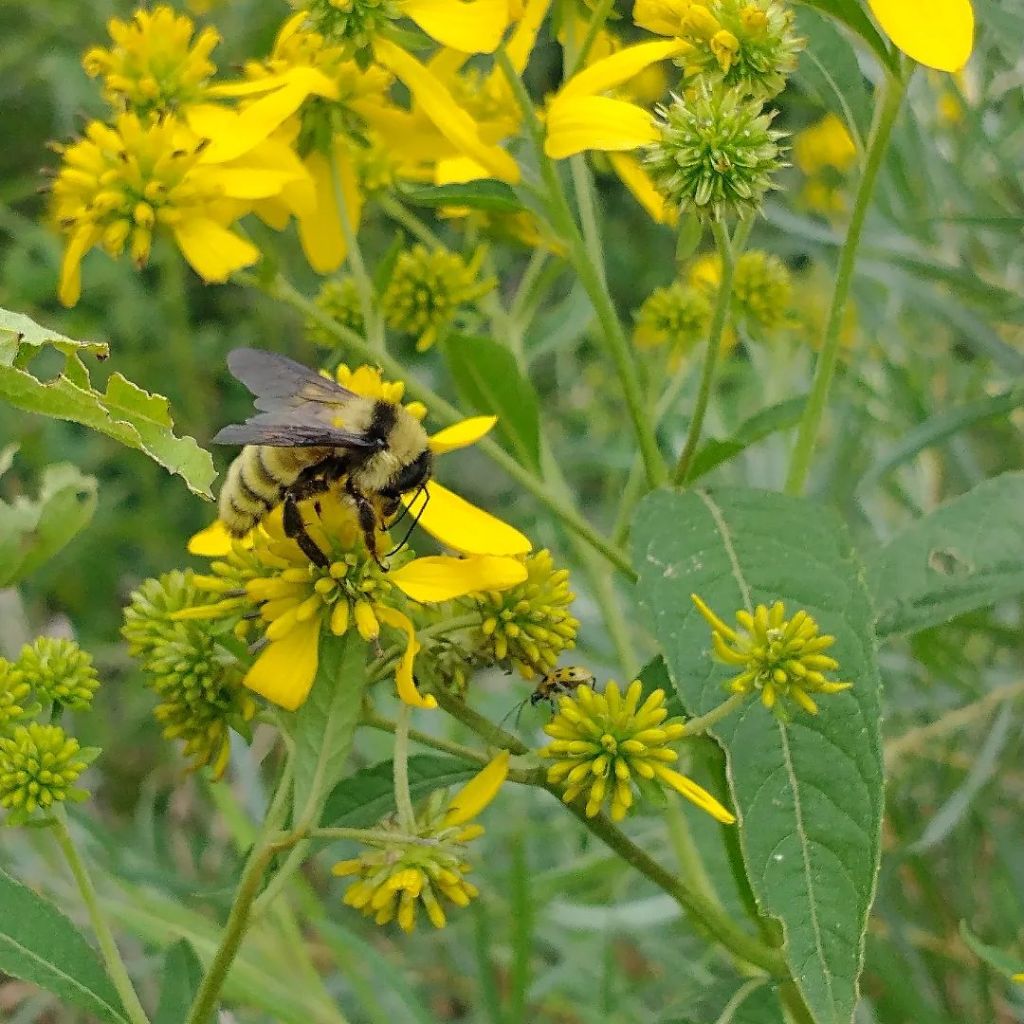
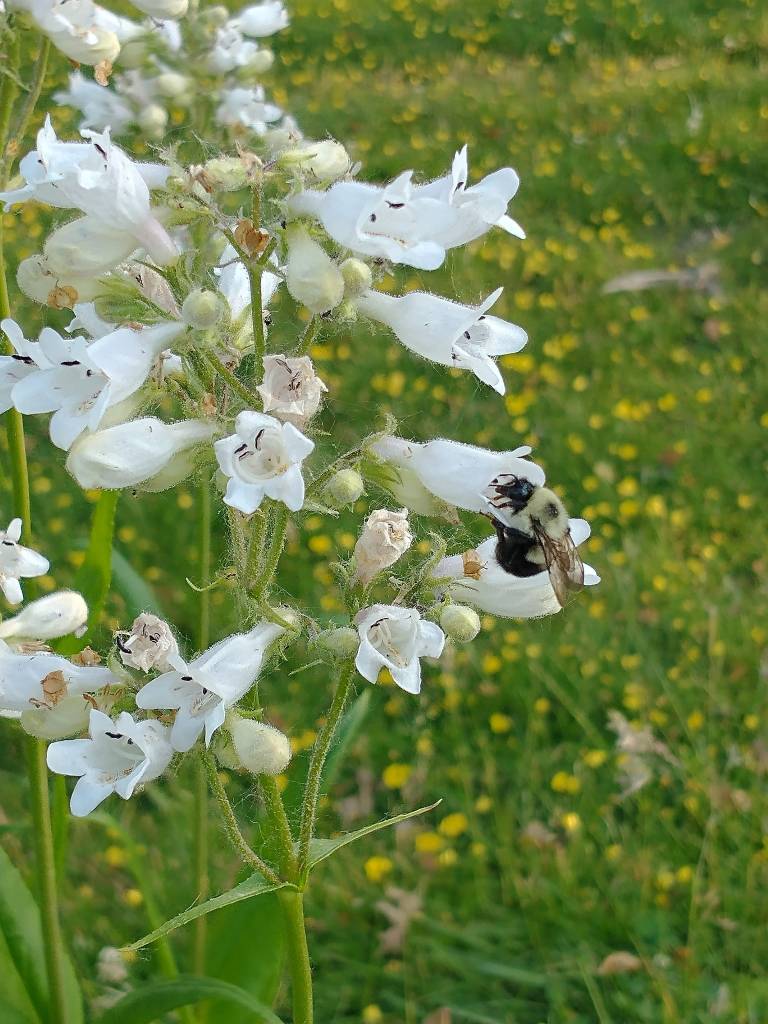
When I first started digging into growing our own food, companion planting was a big focus with my research. If I wasn’t going to use chemicals on my plants, then I would need plants to help balance the ecosystem of my plots. The idea of companion planting is to strategically place different species together for mutual benefits such as attracting pollinators, pest control, improving soil, flavor enhancement, etc. For example, growing basil next to tomato plants is a common companion planting to improve flavor while reducing pests.
Borage (Borago officinalis) is often included in companion planting for attracting pollinators, specifically bumblebees to vegetable flowers, greatly increasing their yield. Borage is used for improving the soil and flavor of nearby plants, while also being edible itself. As Borage is not native to the Americas and can escape gardens to become problematic, I wondered what Ohio native plants could be utilized as alternatives to benefit my garden long term and also appease the bumblebees.
Often in permaculture, plants are assigned specific jobs (such as attractor, mulcher, dynamic accumulator, repellent, etc.) when in reality native plants fulfill multiple roles in the ecosystem and should therefore be respected for their importance to achieve wiser land usage. I realized that if I wanted to encourage bumblebees in my vegetable garden that it was critical that I supply them with the native plants they evolved with and a landscape that protected them.
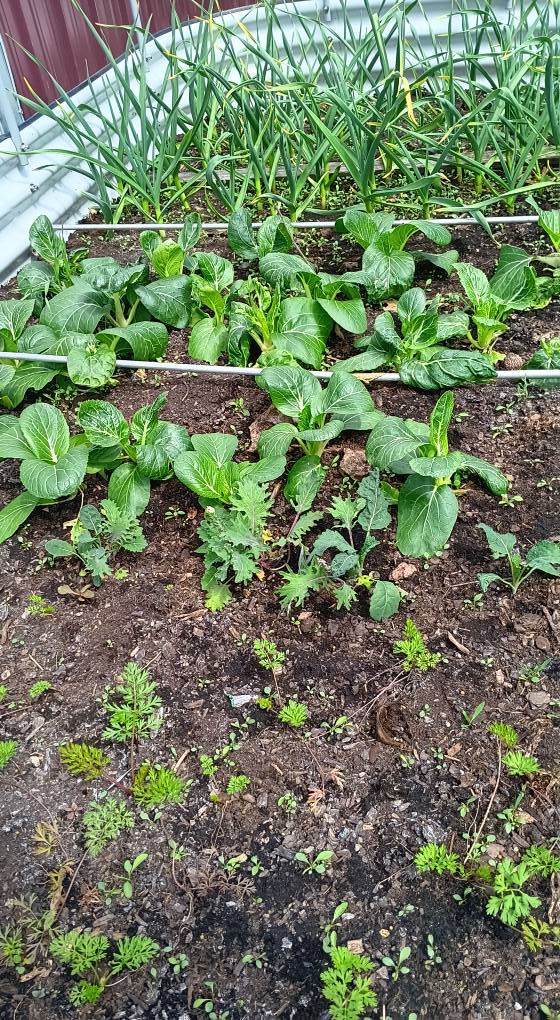
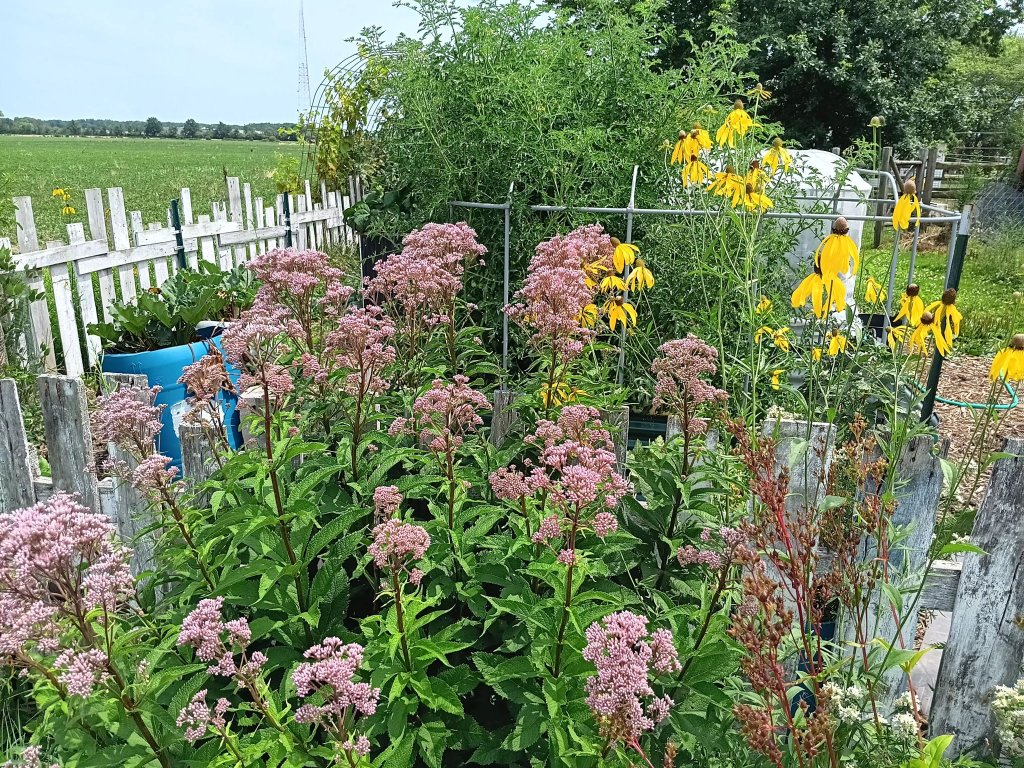
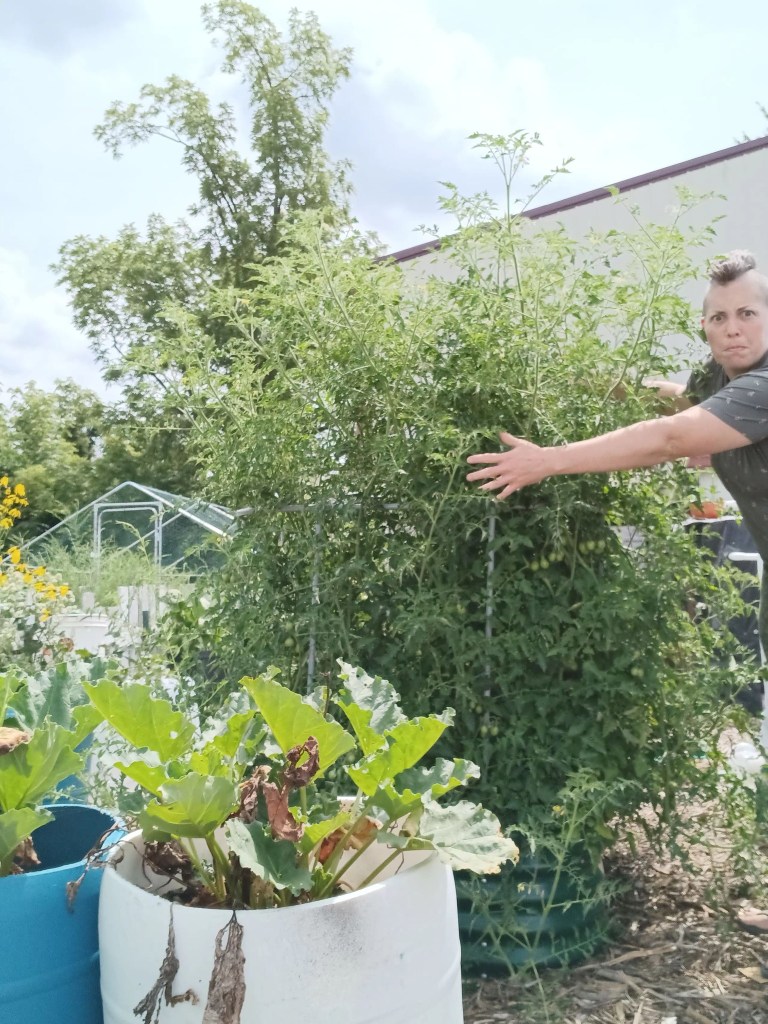
Bumblebee queens wake up from hibernation around late March or early April; emerging when temperatures rise to above 50°F (10°C) and begin foraging for food while searching for a nest site. They choose nest sites in pre-existing cavities such as bird houses, old rodent burrows, or clumped grasses. Once selected, the queen will spend a month collecting resources for the nest; then laying eggs that take 4-5 weeks to become adult workers, who will then take on the responsibilities of nectar and pollen collection while their queen produces and cares for more offspring. By summer, you’ll see the majority of worker bumblebees in the garden, but they wouldn’t be there without the queen. Those queens rely on our spring ephemeral native plants to supply them with the food necessary to move forward, and a chemical free landscape that promotes their populations.
This brings me to highlight Virginia Bluebells (Mertensia virginica) and their importance.
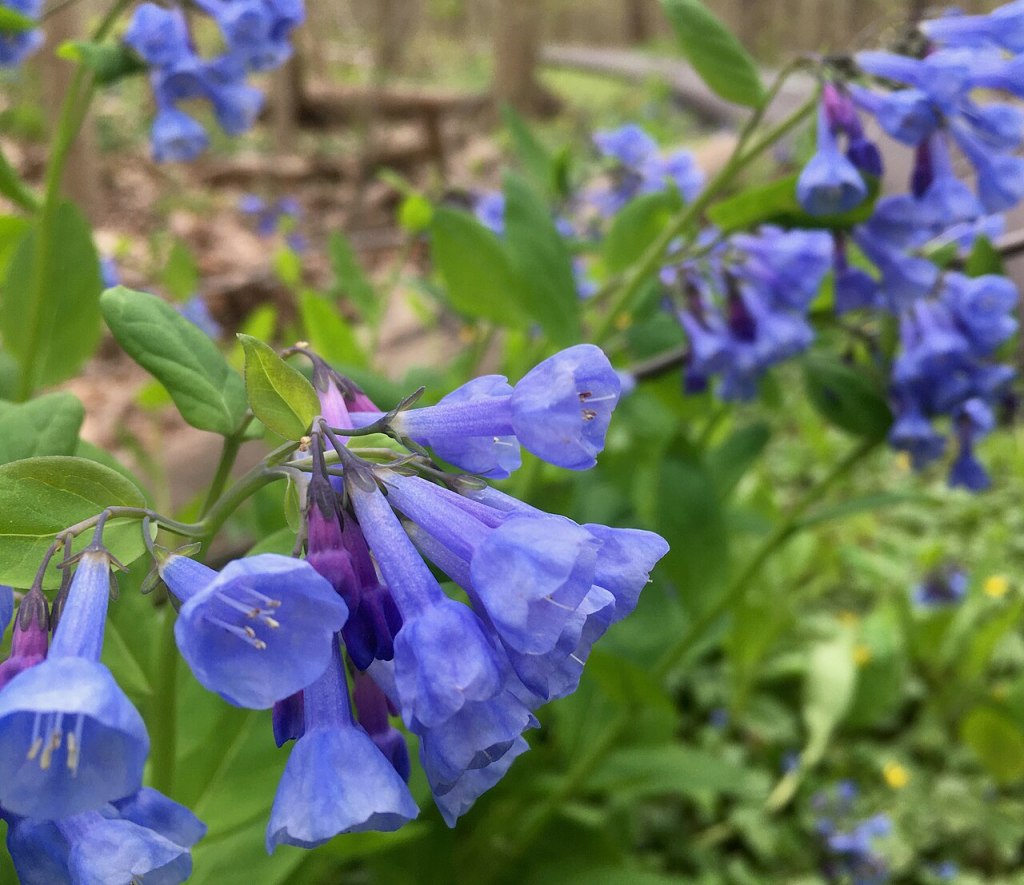
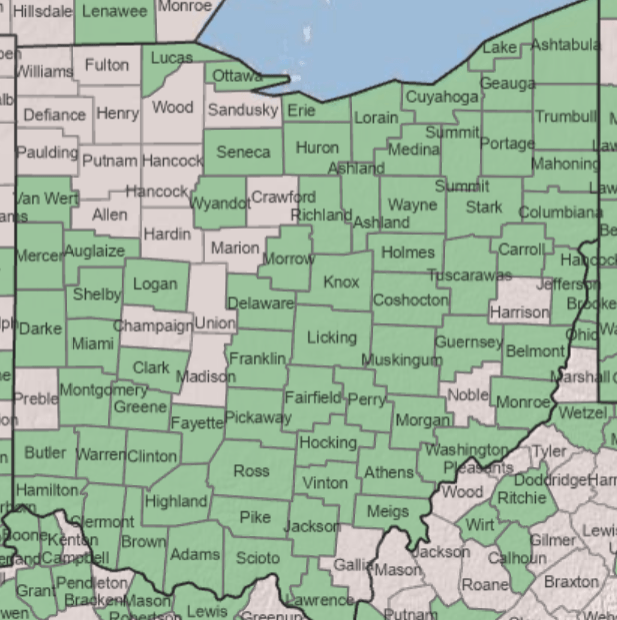
Mertensia virginica is in the Boraginaceae Family, the same one that non-native Borage and Comfrey are a part of. Ohio has 11 native species in the Family including Myosotis verna, Cynoglossum virginianum, Lithospermum canescens, and Hackelia virginiana. Virginia Bluebells caught my specific interest because research showed that they were favored by bumblebees, their bloom time in early spring benefitted emerging queens, their attractive appearance in a landscape, they were native to my county, and that they had food usage.
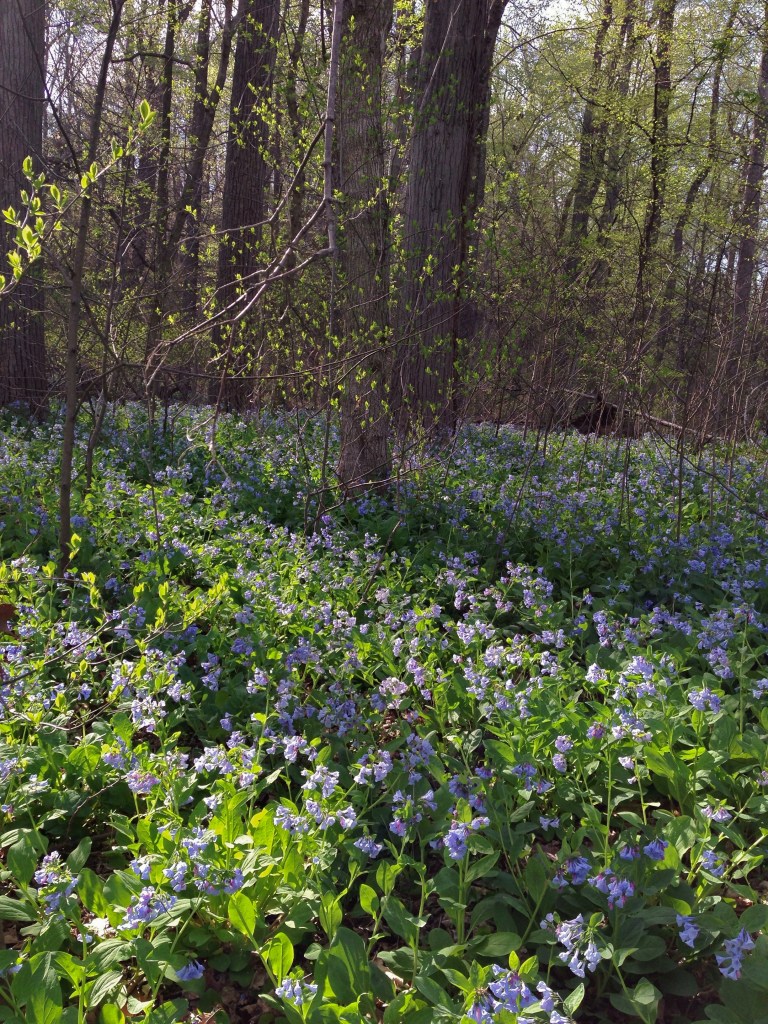
The 2ft tall plants thrive in a woodland setting with rich moist soils in similar conditions that Ramps (Allium tricoccum) adore. Appearing in late March, they will form dense colonies that carpet the forest floor and provide cover for a variety of wildlife. The tubular bell-shaped flowers are cross-pollinated by long-tongued bees primarily, including bumblebees, mason bees, and digger bees. Butterflies and moths will also frequent the flowers.
So why do bumblebees adore Virginia Bluebells so much? Bumblebees are particularly attracted to blues, purples, and yellow flowers due to their ultraviolet (UV) light sensitivity. These colors stand out to bees and are considered highly attractive. The blue halo effect, created by nanoscale structures on flower petals, makes these colors more noticeable to bees. The flower buds that start out pink, mature to blue when ready; signaling to bees where the highest rewards are.
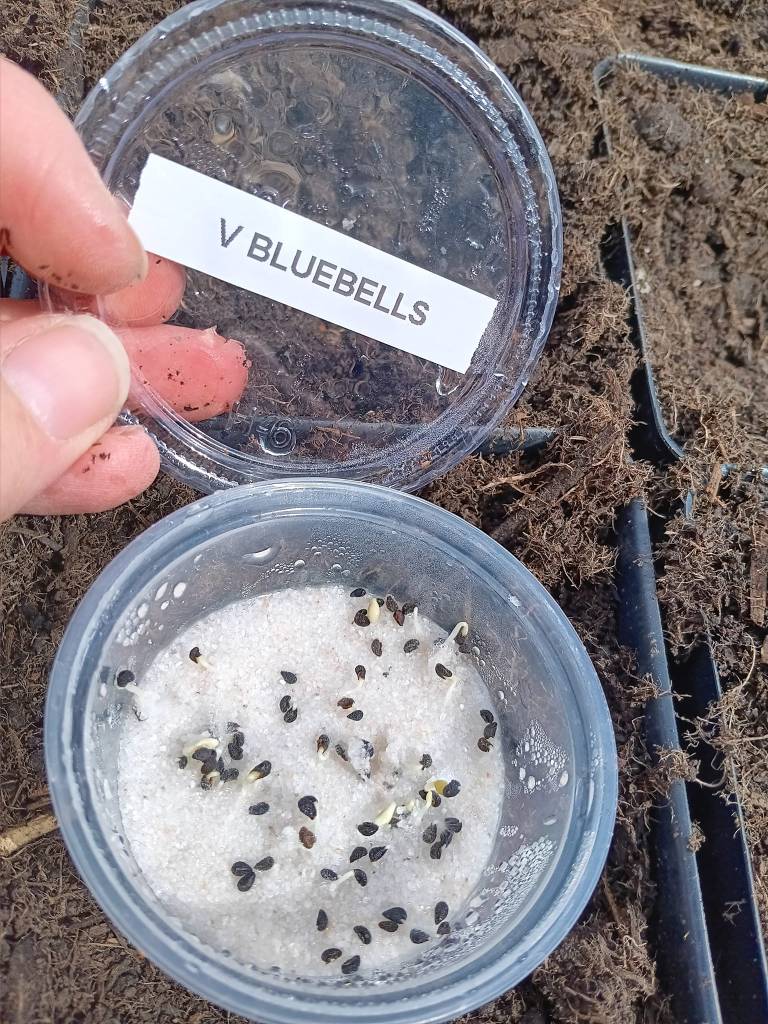
(note seeds sprouting)
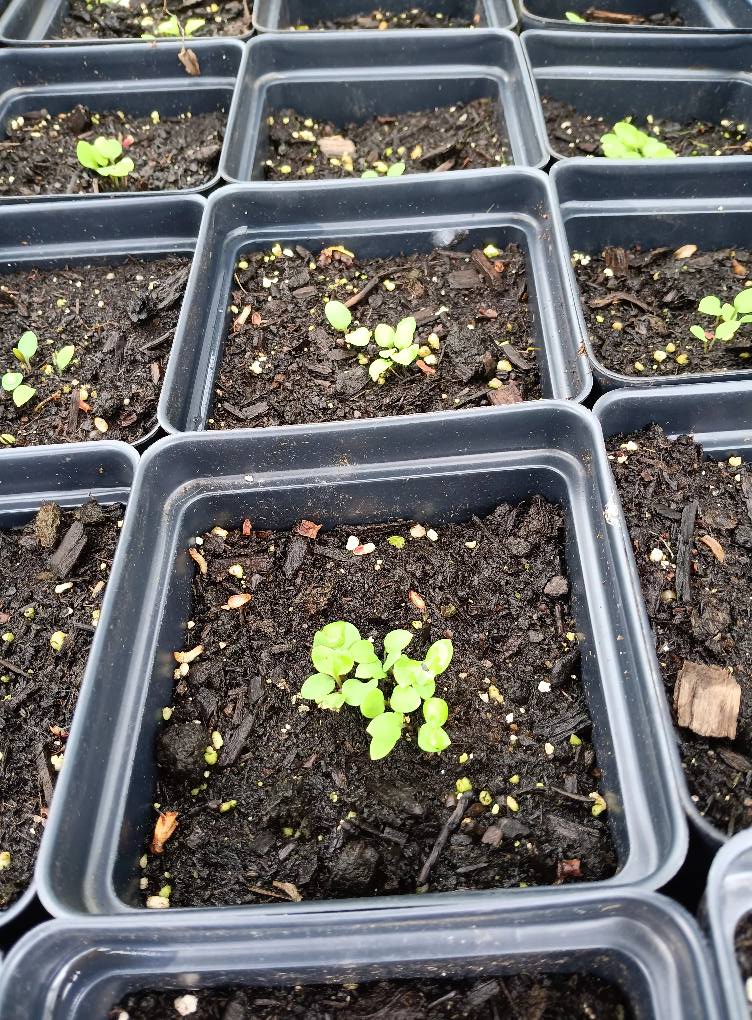
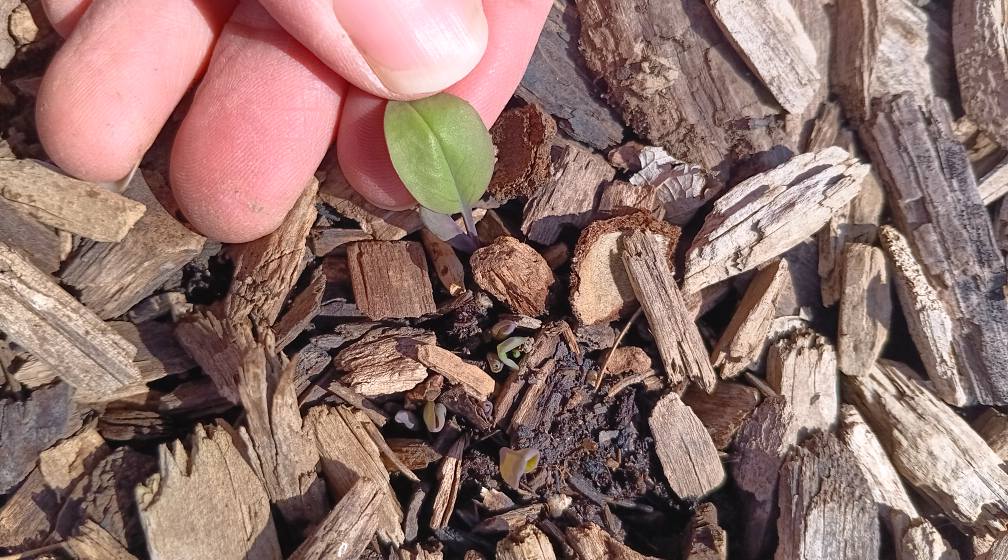
2nd year emergence
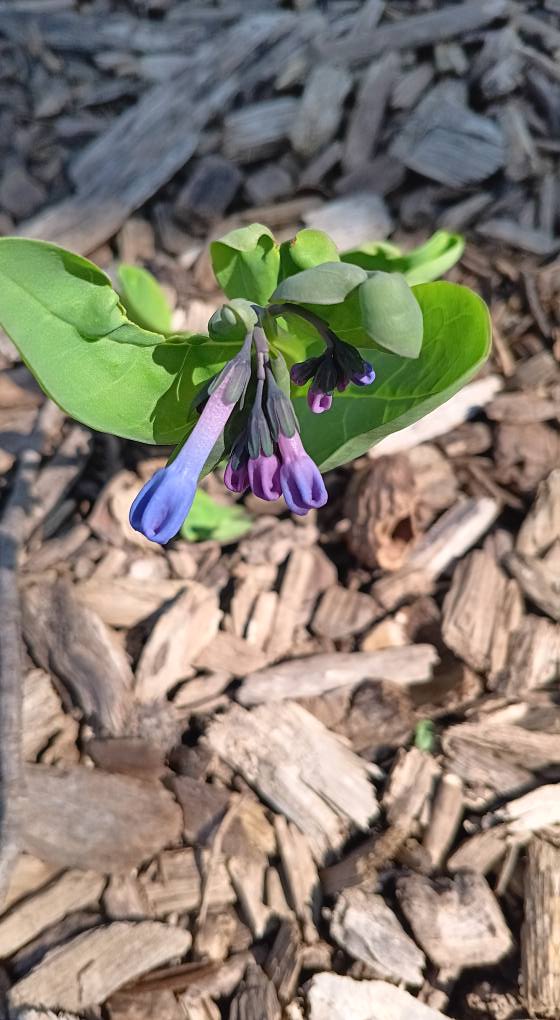
Flowers on 2nd year plants
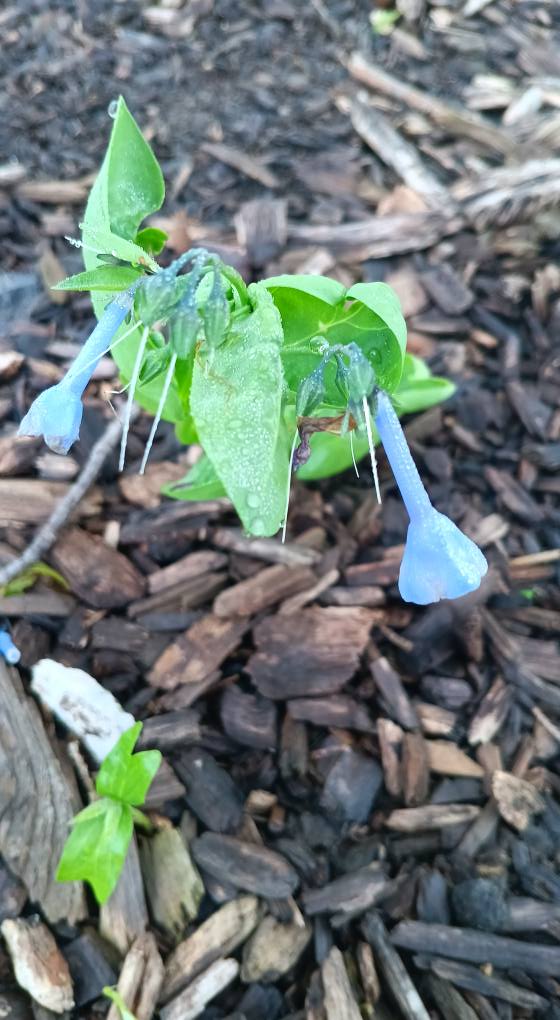
Seeds forming
Once flowering is finalized, Virginia Bluebells begin their dormancy in early June as surrounding trees leaf out and their foliage dies back. The seeds produced need at least 60 days of cold stratification, and will, like many spring ephemerals, sprout while still being kept in the fridge. First year seedlings grow a few leaves before going dormant; the root looks much like a small tuber. You may be blessed with blooms in the second year, but guarantee them by the third if planted in ideal circumstances.
Although deer will browse young shoots of Virginia Bluebells, the plant like most in the Boraginaceae Family have pyrrolizidine alkaloids to prevent herbivores from heavy grazing. Mindful of this, the quantity of these alkaloids in Mertensia species is much lower than that found in Borage or Comfrey but still a consideration when using for food or medicine. Spring foraging is a time to consume a wide assortment of greens and not limited to one type.
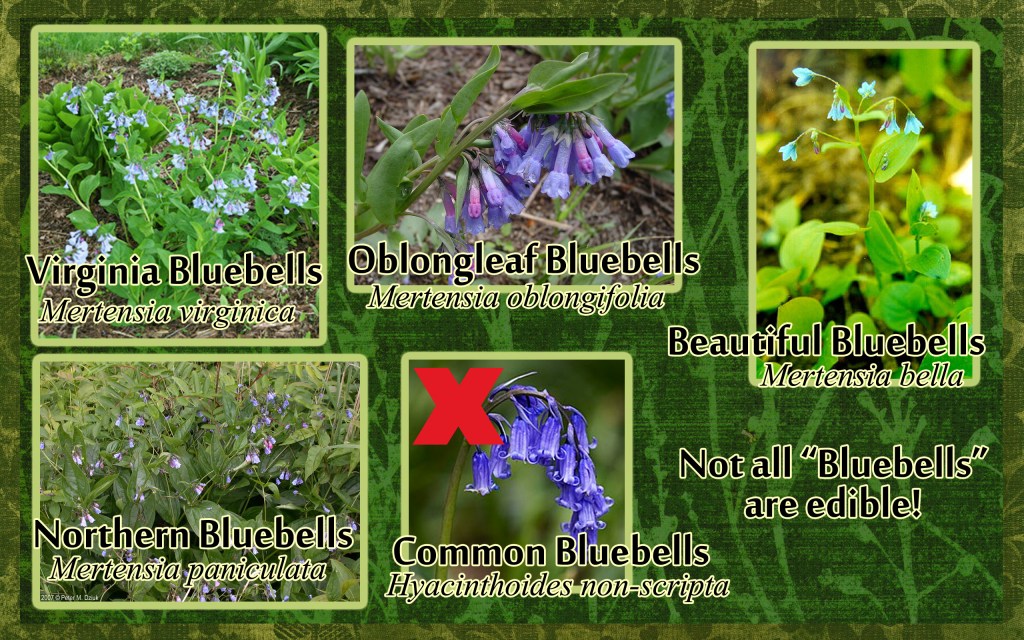
When I first tasted a raw leaf of Mertensia virginica I was pleasantly surprised by the refreshing flavor that to me had a cucumber/borage taste without the heavy hairs found on borage leaves. Others describe it as mushroomy, or with an oyster briny flavor (hence another common name of “Lungwort oysterleaf”), with the stems being sweeter and milder. As a spring edible, it has the benefits of pepping one out of the winter blues with a slew of medicinal applications.
With Ethnobotany, Virginia Bluebells are noted for their usage by the Cherokee for whooping cough and as a remedy for Tuberculosis. The common names of “Lungwort” and “Virginia Cowslip” provide illumination on European comprehension of indigenous teachings to compare Virginia Bluebells to familiar species utilized for similar medicinal reasons (respiratory ailments). Another common name: “Hokoh bluebells” may be derived from the Dakota language; with “hokah” meaning root, or more specifically the Root River in Southeast Minnesota where Mertensia virginica is native. In the Dakota language the prefix “ho” is used to denote voice, which may be a way to indicate that the roots were used to improve breathing.
Out of all the benefits that Virginia Bluebells have for us and our beloved native bees, I encourage their cultivation and look forward to my plants going into their third year. It is important for our gardens to provide sequential blooms for the benefit of our insects; to include the critical spring ephemerals that they require to thrive. I will be keeping an eye out for emerging queen bumblebees in my garden and adding a few extra spaces to encourage them to nest.
Keep those happy glimmers coming!

Links
USDA Plant Database: Mertensia virginica
Native American Ethnobotany: Mertensia virginica
Illinois Wildflowers: Virginia Bluebells
Ladybird Johnson Wildflower Center: Virginia Bluebells
Bluebells and the Bumble Bee Brigade
Bumble Bees: Nesting and Overwintering | Xerces Society
Foraging and Cooking Virginia Bluebells (Mertensia virginica)
Native Plants for Pollinators & Beneficial Insects: Great Lakes
 The Misty Mushroom


Leave a comment