
Would a weed by any other name still be considered a weed? Many native plants have weed in their name: Milkweed, Butterfly Weed, Joe Pye Weed, Butterweed, Thimbleweed, Rattlesnake Weed, Sneezeweed, Jewelweed, Pokeweed, Burnweed, and the list goes on. The term “weed” is associated with any species of plant that grows in an area not desired by humans. These specific common names of the United States originate from settlers clearing the land for crops and then having these species take advantage of the freshly disturbed ground.
Often, these native plants called weeds are in fact pioneer species that cycle into disturbed soil and begin the process of ecological succession, paving the way for future plants. A prairie fire, for instance, will show a great amount of species flourish after the burn, and then die off as others take their place; the seeds of these pioneer species hanging out in the soil until the cycle starts all over again with another burn. It is a great disservice then, to consider these native plants as weeds when they are critical for our ecosystems in many different ways. They often improve the soil and are host plants for a variety of insect species while providing food or shelter for wildlife. Their value then goes beyond the common name and association as a weed.
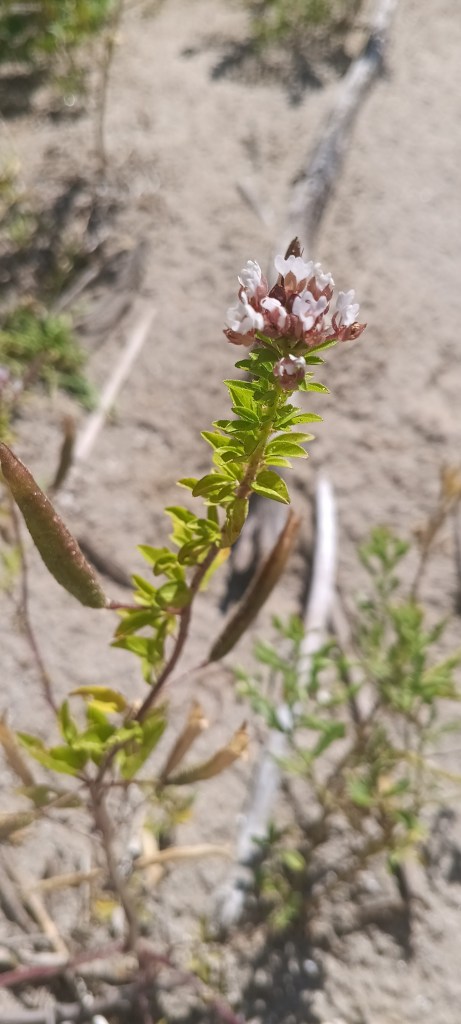
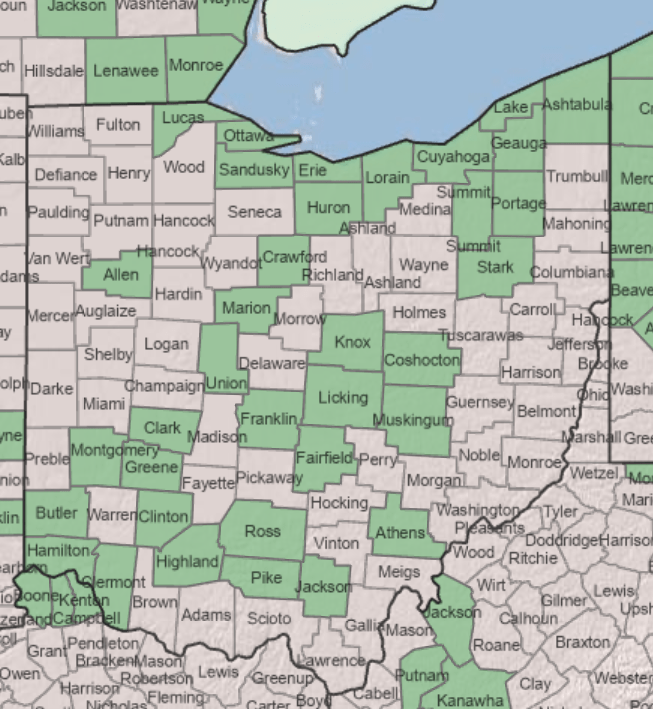
Redwhisker Clammyweed (Polanisia dodecandra) is one such plant that has weed in the name, and is found commonly in disturbed areas that are sandy and dry with full sun. It is understandable with these preferences, that Redwhisker Clammyweed can be found frequently along the beaches of Lake Erie and other sandy areas often too unforgiving for many plant species.
Being drought tolerant, it is an exceptional survivor for these areas while providing pollinators in the hottest summers with nectar and pollen. The nectar quantity provided by the week-long blooms is at a high 2.78 µL per flower for a couple days. This hearty annual certainly makes its presence known for our insects.
Redwhisker Clammyweed is noted as a host plant for several butterfly species including the native Checkered White (Pontia protodice) which is a temporary visitor to NW Ohio in the Spring and Fall, and non native cabbage butterflies.The seeds are eaten by birds including turkeys, quail, doves, and game birds while also being used by small mammals.
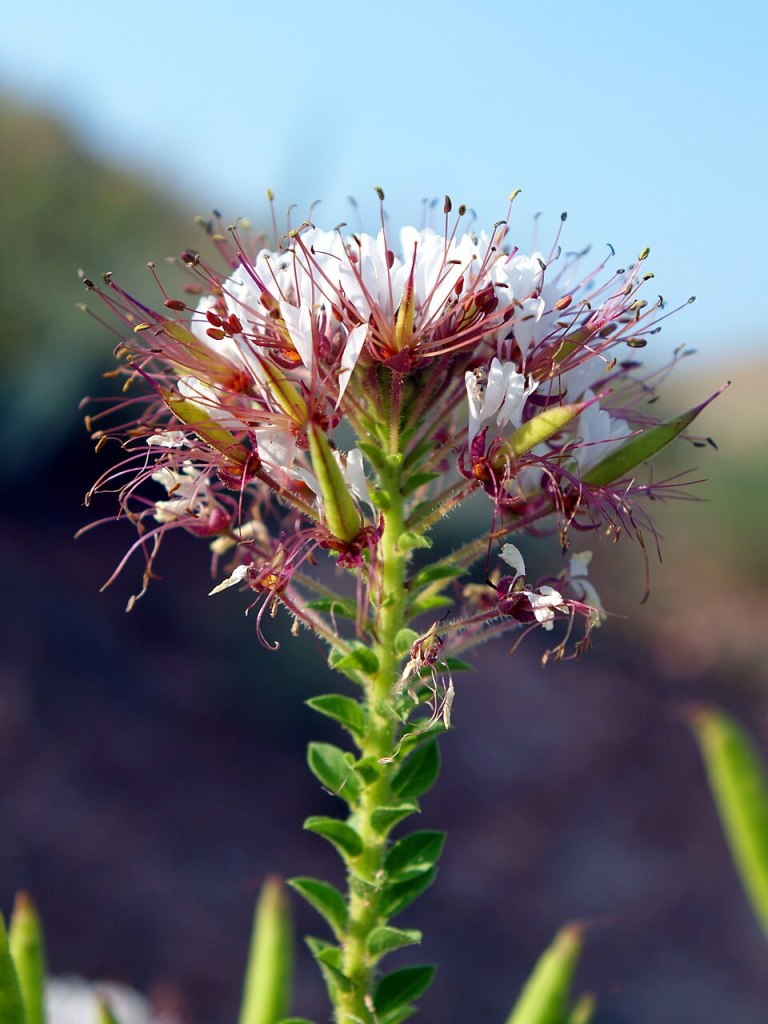
The common name (being fun to say) is partly due to the red stamens extending beyond the white blooms. Because of these red whiskers, it is often mistaken with Spiderweeds/Beeweeds of the Cleome genus found predominantly out west that they are closely related to. Redwhisker Clammyweed can be identified from Rocky Mountain Beeweed (Cleome serrulata) by the seed pods; our Ohio native has upright pods vs the downward pods of the Western native Cleome.
The name Clammyweed is due to the plant’s sticky residue that dries on the hands and makes them feel clammy. When I handled them, I found the sensation peculiar; almost as if I had dried out my hands working dough in the kitchen. The plant when crushed or bruised has a strong smell that is found unpleasant by herbivores that discourages them from browsing. Although some are turned away by the aroma when the leaves are crushed, it does have food value. Polanisia dodecandra is in the Brassicales order where well known species such as broccoli, brussel sprouts, mustard, bok choy, radishes, kale, and many other edible plants are found.
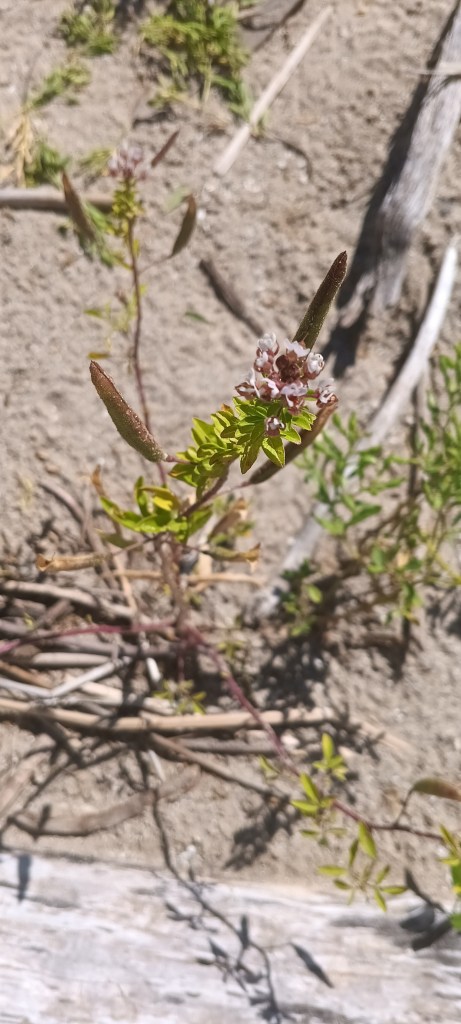
In ethnobotany, the Pueblo people of the southwest use Redwhisker Clammyweed for food; cooking young plants as greens, drying leaves for winter use, and also have ceremonial usage for the species. Cleome serrulata, a close relative known as Rocky Mountain Beeweed also has noted food usage by the southwest people including Pueblo, Zuni, Hopi, Navajo, and many others. I personally don’t recall finding the aroma of the crushed leaves unpleasant, but many note that it has a sulfur quality to it. In Sam Thayer’s Field Guide to Edible Wild Plants of Eastern & Central North America he says: “…the smell reminds people of green bell peppers, and I think the flavor goes well with red meat in a stew or pot roast.”
This native plant, which has great value to our wildlife and us, should not be considered a weed and eradicated…but celebrated. In a garden, it provides a great swath of interesting blooms near Partridge Pea, Coreopsis, Yarrow, and many others. As a re-seeding annual plant that thrives in unforgiving soil and grows 1-3ft in height, it can easily become a beloved plant for tough areas. Look for this wonderful species this summer and fall during your wanderings and consider adding it to your landscape!
Julie Ibarra of The Misty Mushroom
LINKS
Native American Ethnobotany: Polanisia dodecandra
New Jersey EPA: Redwhisker Clammyweed pdf


Leave a comment